
14 July 2026
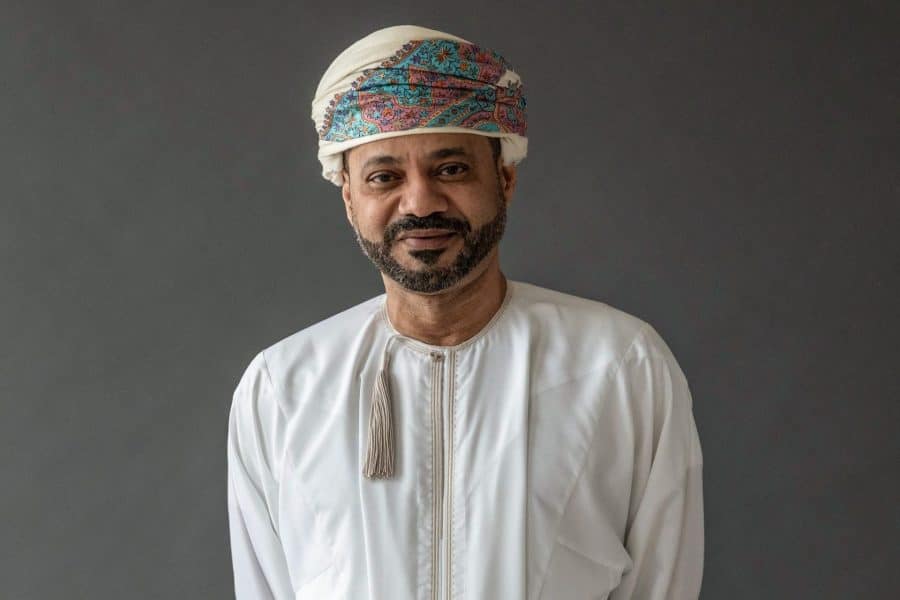
The following is the full English text of an article by Oman’s Foreign Minister Sayyid Badr published in Le Monde newspaper in France.
To view a summary of this article please click here.
“The people of Oman and our neighbours around the Gulf are living in the aftermath of an unnecessary war. They fervently hope that it is indeed the aftermath and not simply just another brief pause. But even if the war is not over and someone is so reckless and foolish as to resume hostilities, we must try to draw some lessons from it. Rather than dwell on the recent past, with all its errors and its miscalculations, we must turn to the future.
“One issue demands immediate attention. As widely reported, complex discussions are currently being held with the aim of devising a long-term arrangement for freedom of navigation through the Strait of Hormuz. As one of the two states with territorial waters in the Strait, Oman has a special responsibility to work with both Iran – which is the other state whose territorial waters include part of the Strait – and the wider international community of Strait users to find a practical, durable and legal arrangement for free navigation. The international community needs a successful outcome from these consultations; free navigation through the Strait of Hormuz is vital for the global economy. And I would like to recognise the very helpful role played by France in these discussions. But the need to resolve this issue now should not prevent us from looking further ahead and recognising that the Strait of Hormuz is just one element in a bigger picture which also requires serious attention.
“Since 1979 the security of the Gulf has been organised on the basis of what used to be called ‘containment’. According to the logic of containment – which is also, explicitly a logic of exclusion – the primary objective of regional security arrangements was the effective defence of the Arab Gulf (and Western interests there) against an existential threat from Iran. The profound flaw in this logic was that Iran in fact posed no such existential threat. The combination of excessive local defence spending, the expansion of US bases in the Gulf and an over-the-horizon protective presence was developed and maintained at great cost but to very little real purpose.
“The recent war has revealed that containment was a myth, a reality acknowledged now even by many of those who had previously been persuaded that more than forty-five years of costly containment was a necessary evil. The gravest threats to the security of the Gulf come not from within the Gulf itself but from decisions and actions taken outside it, above all in Tel Aviv. That much is now clear. What follows, though, from this recognition of reality? How can the bigger picture of Gulf security be addressed?
“There are eight states around the Gulf littoral; in addition to Oman and its five GCC partners, there are the two states who have at one time or another been the object of ‘containment’ policies and military interventions – Iraq and Iran. I note of course that France was wise enough to stay out of the 2003 Iraq war.
“All eight countries have vital national interests and significant international responsibilities – to differing degrees and with differing emphases – for the security of the Gulf they share. All eight must therefore be included in any process leading to a new security arrangement; all must contribute, participate and share responsibility.
“This means that there will have to be serious and possibly difficult conversations about the future. There are tough questions to be asked and pragmatic decisions to be deliberated upon. One essential conversation for which old assumptions will need to be set aside will concern which partnerships will genuinely help the eight Gulf states achieve the security they need, both for themselves and for the international community, and which partnerships bring unwanted vulnerabilities.
“At the very least this will require an honest appraisal of relationships with powerful friends and allies such as the United States. Not to discard these relationships – which have deep historic foundations and promise much valuable future cooperation – but perhaps to reset them to make them align better with the strategic reality the recent war has revealed. If inclusion is to replace containment as the core principle of regional security cooperation, what is the best and most constructive role for friends such as the United States?
“These are, of course, Gulf conversations for Gulf states. But the Gulf is not separable as a region from its immediate surroundings: other geographical and logistical realities must also be considered. There is, to take just one example which has yet to receive the attention it needs, the wider sub-region of the north-west Indian Ocean. Here there are many strategically important ports and waterways, linked in multiple ways with the infrastructures of the Gulf. One need only think of the Bab el-Mandeb and access to the Red Sea and its littoral, another issue which the recent crisis over the Strait of Hormuz has once again highlighted. All of the inhabitants of this wider region would benefit from an effectively applied legal and practical framework which could underpin an environment conducive to wider prosperity.
“The war has been a disaster. There was no UN mandate, and it achieved none of its apparent objectives. But if it does finally put the myth of containment in the Gulf to rest, there is cause for some optimism that something better can be developed in its place, and an error of nearly half a century corrected.”
Related stories: