
12 June 2026
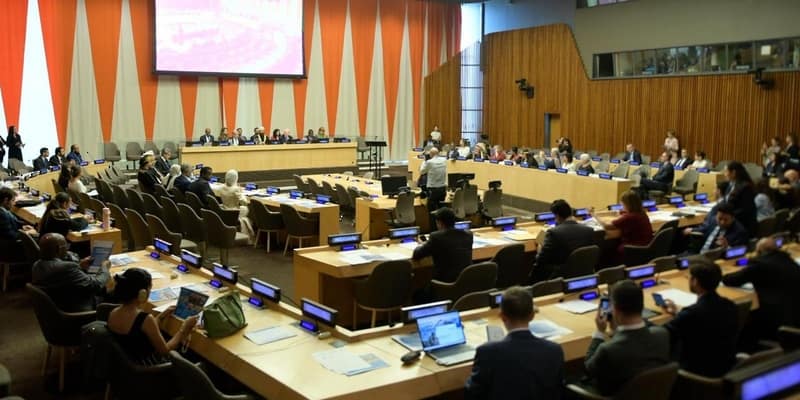
The Sultanate of Oman launched at United Nations Headquarters in New York the Muscat Plan for religious and traditional leaders and indigenous peoples to address hate speech and prevent genocide, mass atrocities and incitement through mediation for peace.
The launch ceremony, held under the patronage of the UN Secretary General António Guterres, brought together high-level participants from the United Nations Alliance of Civilisations, the United Nations Office on Genocide Prevention, representatives of Member States and international organisations, the Religious and Traditional Peacemakers Network, as well as traditional leaders, indigenous peoples and UN partners working in conflict prevention and peace building.
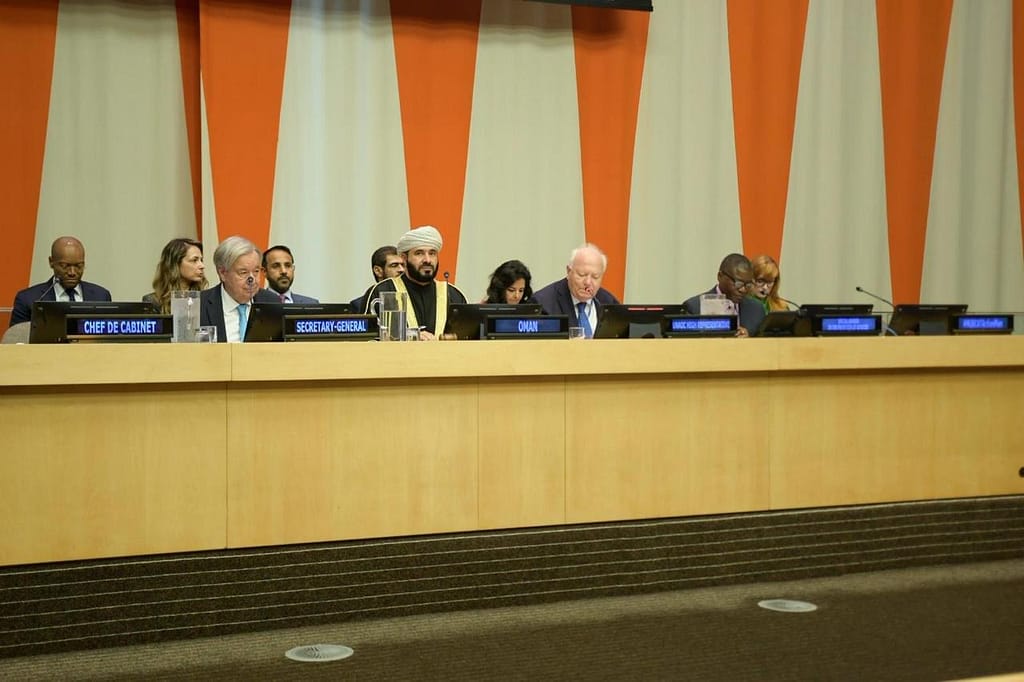
In a speech delivered during the ceremony, Dr Mohammed bin Said Al Maamari, Minister of Endowments and Religious Affairs, said that the Muscat Plan embodies the vision articulated by His Majesty Sultan Haitham bin Tarik that Oman’s message of peace is founded on building bridges, fostering rapprochement and deepening understanding among peoples.
He added that the Plan is based on the belief that human diversity is a source of enrichment rather than conflict and that the real challenge lies in managing differences and creating spaces for cooperation and mutual respect. The Plan does not call for the elimination of identities and particularities, but seeks to strengthen shared values that uphold human dignity and promote the common good.
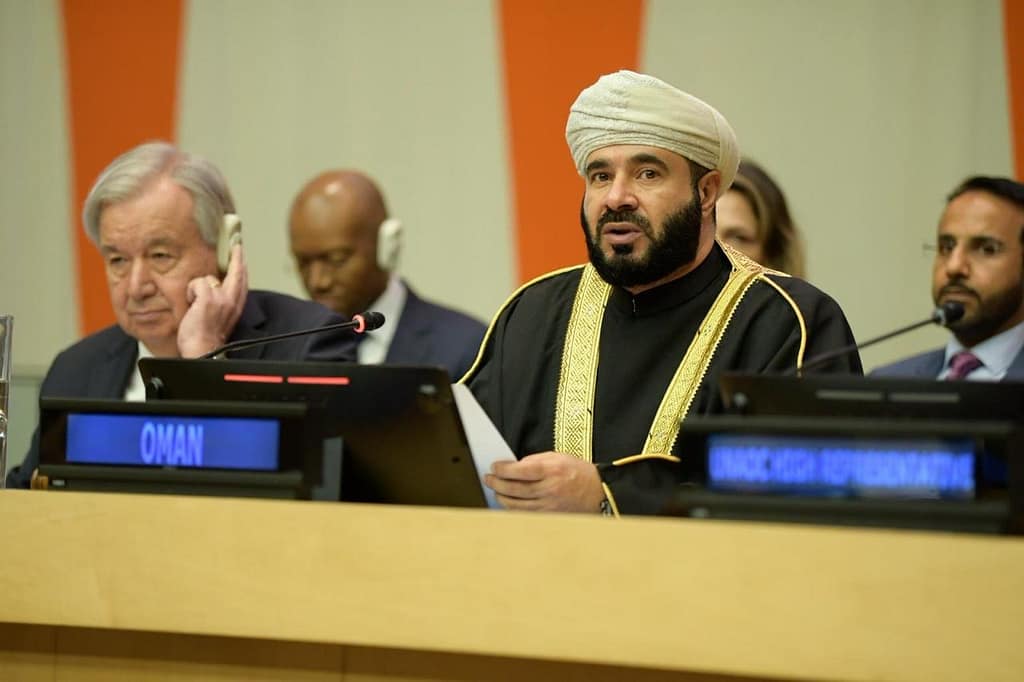
The Minister noted that the world today faces interconnected challenges, ranging from poverty and environmental crises to hate speech and declining trust between communities, making peace and development a shared responsibility that requires cooperation, dialogue and confidence building.
He explained that the Plan affirms that shared values are not merely moral slogans, but the foundation of stability and sustainable development. It also recognises religions and cultural traditions as important sources for promoting understanding and human solidarity and acknowledges the influential role of religious and traditional leaders in advancing a culture of dialogue and peace.
The Minister said that the challenge facing the world today is not the existence of multiple identities and cultures, but a declining ability to understand others and expand opportunities for cooperation. The message of the Muscat Plan, he said, is therefore to invest in what unites humanity, strengthen trust and build partnerships based on respect, responsibility and shared interests.
The Minister said that genuine peace is built on trust rather than fear, inclusion rather than exclusion and benefiting from diversity rather than confronting it. Drawing on Oman’s experience and approach to coexistence and dialogue, he said the Muscat Plan represents a global call to move from managing differences to building partnerships and from narrow competition to cooperation for a more secure, just and prosperous future.
Dr Al Maamari also expressed his appreciation to the United Nations, the Secretary-General, the United Nations Alliance of Civilisations, the United Nations Office on Genocide Prevention, the Religious and Traditional Peacemakers Network and all international and regional partners who contributed to the development of the Muscat Plan. He described the initiative as the product of extensive dialogue, collective effort and a firm belief that shared human values can advance peace and development.
UN Secretary-General António Guterres said that hate speech has become a “serious and growing threat” to international peace and security. He warned that it divides societies, strips people of their humanity and paves the way for bloodshed and atrocity crimes.
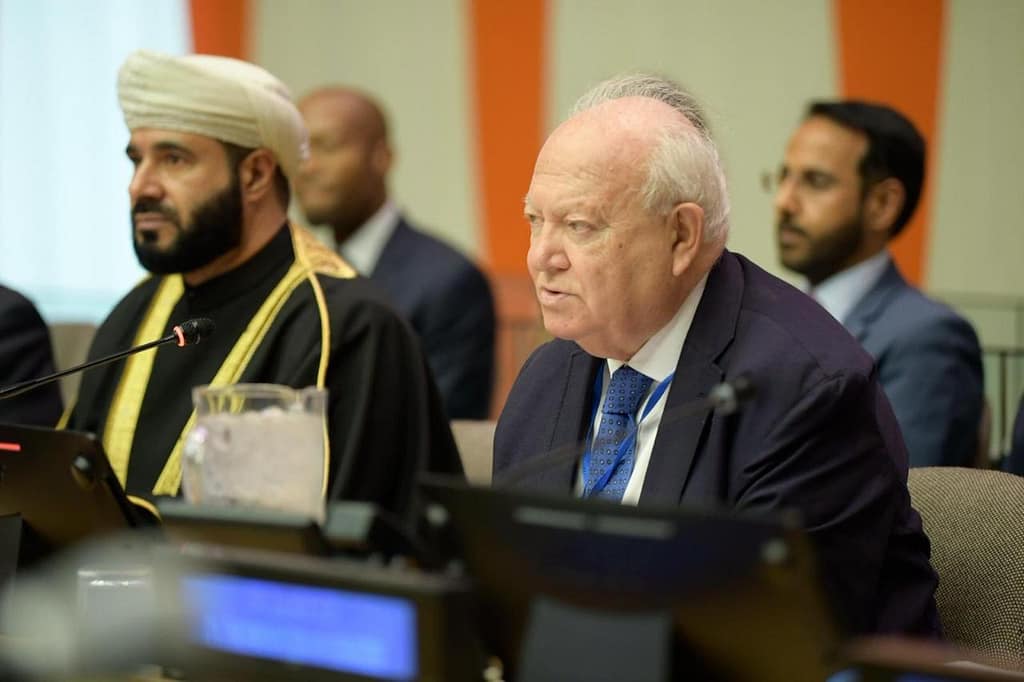
He added that hate speech is a deliberate act and a common element in virtually every sequence of events leading to genocide and other atrocity crimes. He called for breaking this cycle through education, support for targeted groups, stronger government action and more robust measures by technology companies to curb the spread of hatred and incitement to violence.
The Secretary-General commended Oman and its partners for leading the development of the Muscat Plan, describing traditional leaders and indigenous peoples’ leaders as “essential partners in the pursuit of peace and security”. He noted that the world is witnessing escalating conflicts, growing inequalities and worsening climate disruption, while hate speech spreads at an unprecedented pace through largely unregulated digital platforms, further amplified by artificial intelligence.
He explained that the plan draws upon the accumulated knowledge and experience of these leaders and recognises that hate speech is both an early warning sign of violence and a driver of its escalation. He reaffirmed the United Nations’ commitment to strengthening their role in conflict prevention and resolution.
The Muscat Plan serves as an international framework aimed at enhancing the role of religious and traditional leaders and indigenous peoples in addressing hate speech, reducing the drivers of identity-based violence, strengthening social cohesion and preventing genocide and mass atrocities through mediation, dialogue and peacebuilding.
This is an unofficial English version of an Arabic report. To view the official Arabic text, click here.
Related stories:
- UN/