
23 April 2026
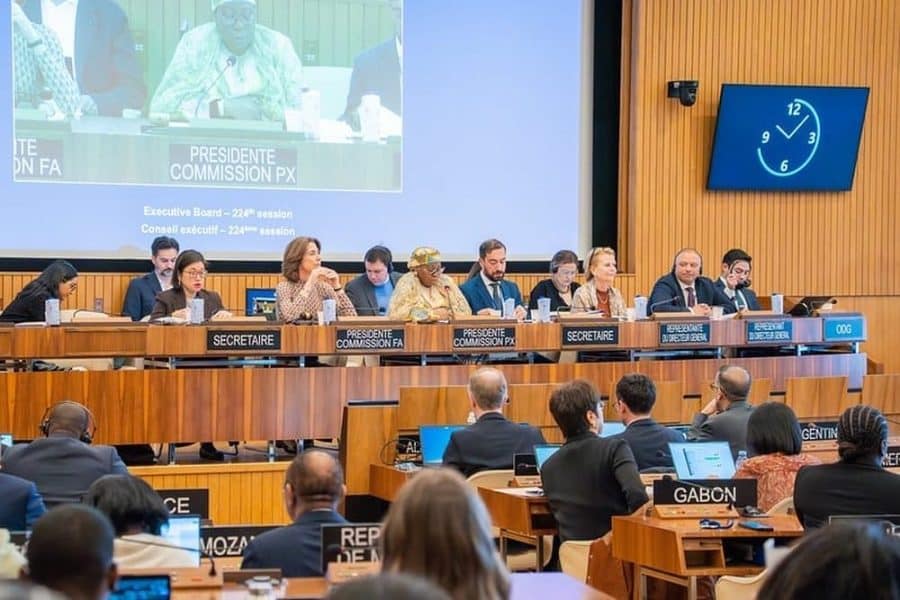
UNESCO has approved the launch of the UNESCO–Sultan Haitham Prize for Intangible Cultural Heritage Safeguarding, in a step that reflects international recognition of the leading role played by Oman in safeguarding intangible cultural heritage and strengthening its presence as one of the shared pillars of humanity.

The award is the outcome of a joint initiative introduced through a national proposal led by the Ministry of Culture, Sports and Youth in cooperation with the Ministry of Education and the Omani National Commission for Education, Culture and Science, and in coordination with the Permanent Delegation of Oman to UNESCO. Its conceptual framework and objectives were developed in line with international trends in protecting intangible cultural heritage.
Oman is among the first countries to ratify the 2003 Convention for the Safeguarding of the Intangible Cultural Heritage, under Royal Decree No. 56/2005 issued on 22 June 2005. The Ministry of Culture, Sports and Youth plays a central role in implementing the convention by registering elements of intangible cultural heritage across its three lists: the Representative List of the Intangible Cultural Heritage of Humanity, the Urgent Safeguarding List and the Register of Good Safeguarding Practices.
The award reflects the continued high-level interest of His Majesty Sultan Haitham bin Tarik in the cultural sector. His Majesty assumed responsibility for the Ministry of Heritage and Culture in 2002, during which time efforts were made to advance cultural work, culminating in Oman’s accession to major UNESCO conventions, most notably the 2003 Convention for the Safeguarding of the Intangible Cultural Heritage.
Among the key cultural achievements in Oman, in which His Majesty has played an important role, are the establishment of the National Museum, the Oman Across Ages Museum, the National Records and Archives Authority and the Sayyid Tariq bin Taimur Cultural Complex, in addition to cultural centres and libraries across Oman and abroad.
The award is expected to become one of the leading global initiatives supporting outstanding contributions in the field of intangible cultural heritage. It targets governmental and non governmental organisations, individuals, groups, institutes, research centres and universities working across various cultural heritage fields.
The award aims to achieve several objectives aligned with international cultural efforts. These include recognising organisations that have contributed to safeguarding and transmitting intangible cultural heritage recognised by communities and groups, and in some cases individuals, as part of their heritage in accordance with Article 2 of the 2003 Convention. It also aims to protect intangible cultural heritage and enhance its role in promoting social cohesion, peace, equality and sustainable development, ensure respect for the heritage of concerned communities, groups and individuals, raise awareness at local, national and international levels and encourage mutual appreciation.
In addition, the award supports the effective implementation of the 2003 Convention through links with initiatives approved by its governing bodies, including UNESCO’s electronic platform for exchanging expertise in safeguarding intangible cultural heritage. It also contributes to achieving the UN Sustainable Development Goals 2030, particularly quality education, sustainable cities and communities and peace, justice and strong institutions.
Sayyid Saud bin Hilal Albusaidi, Minister of Culture, Sports and Youth, said that the adoption of the award reflects international appreciation for Oman’s role in supporting global efforts to safeguard intangible cultural heritage and strengthens its position within international cultural priorities.
He added that the award represents a qualitative addition to UNESCO’s cultural framework and contributes to highlighting intangible cultural heritage as a pillar of human identity and a bridge for dialogue among peoples, while supporting pioneering initiatives and enhancing community participation in safeguarding this heritage.
He noted that the award aligns with sustainable development goals by promoting social cohesion and reinforcing the values of mutual understanding and respect, affirming Oman’s commitment to continuing support for international efforts and strengthening cooperation with UNESCO and member states in this field.
He said that the award reflects pride in the support and care extended to intangible cultural heritage at both national and international levels by His Majesty Sultan Haitham bin Tarik.
The award will contribute to supporting scientific research and innovation in cultural heritage fields, enhancing educational aspects linked to it, facilitating the transfer of knowledge and expertise between generations, promoting cultural dialogue among peoples and reinforcing the values of tolerance and mutual understanding.
It will cover all aspects of intangible cultural heritage as classified by UNESCO, including oral traditions and expressions, performing arts, social practices and festive events, knowledge and practices concerning nature and the universe and traditional craftsmanship skills.
Eligibility for the award requires that nominated entities such as institutions, community centres, non governmental organisations, cultural associations and other community bodies have made significant contributions to safeguarding, transmitting or promoting intangible cultural heritage. The general and technical criteria and award categories will be developed by UNESCO in coordination and agreement with the Ministry of Culture, Sports and Youth.
This is an unofficial English version of an Arabic report. To view the official Arabic text, click here.
Related stories: