
14 July 2026
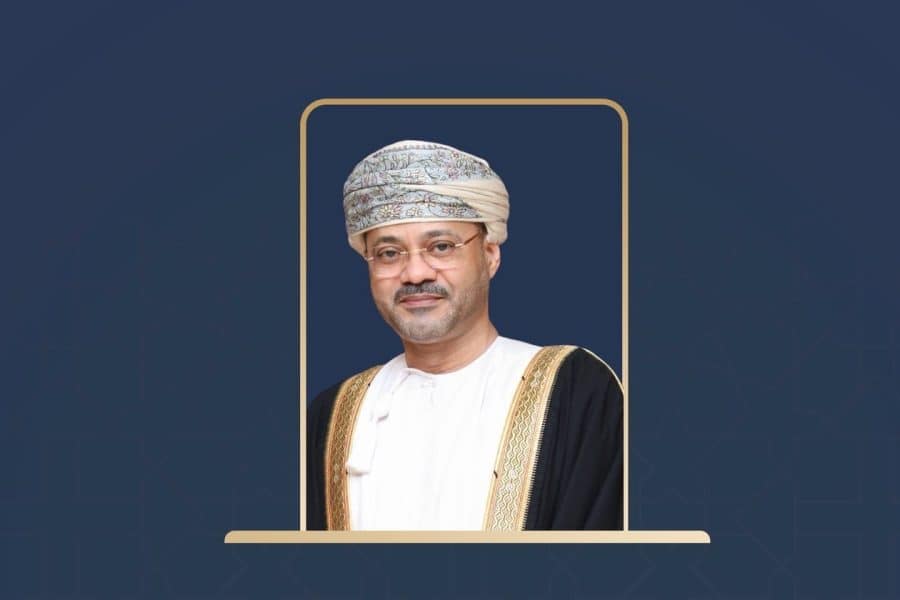
Oman’s Foreign Minister Sayyid Badr Albusaidi has said that the war against Iran has exposed the need for a comprehensive reassessment of the Gulf’s security architecture. He has called for a transition from the policy of containment, which has shaped regional security arrangements for decades, to a system based on the inclusion of all countries in the region and their shared responsibility for collective security.
In an article published by the French newspaper Le Monde, the Foreign Minister writes that the peoples of the Sultanate of Oman and the Gulf states are living with the consequences of a war that should never have occurred.
He explains that one of the immediate priorities is to establish a permanent framework to guarantee freedom of navigation through the Strait of Hormuz. He highlights Oman’s particular responsibility in this regard, as its territorial waters, together with those of Iran, border the Strait.
The Foreign Minister says that Oman and Iran, in cooperation with the international community, should develop practical, sustainable and internationally lawful arrangements that guarantee freedom of passage and protect navigation through this vital waterway, which remains one of the principal pillars of global trade and the world economy.
He commends France’s constructive role in discussions on the future of navigation through the Strait of Hormuz. At the same time, he says that addressing issues relating to the Strait should form part of a broader strategic vision encompassing the Gulf and its connected maritime routes.
Sayyid Badr argues that the security system established in the Gulf since 1979 has been based on the assumption that Iran represented an existential threat to the region and to Western interests. He described that assumption as fundamentally flawed.
He notes that the past decades have witnessed massive military expenditure, the expansion of United States military bases across the region and the consolidation of a security system dependent on external protection. Despite this, it has failed to establish lasting security or prevent successive wars and crises.
The Minister says that the recent war has demonstrated the extent to which the policy of containment has been an illusion. He adds that the greatest threats to Gulf security often stem from decisions taken outside the region, particularly in Tel Aviv.
He raises questions about how the Gulf’s security system should be rebuilt in light of these developments. He says that any future security architecture must include all eight states bordering the Gulf: the six Gulf Cooperation Council member states together with Iran and Iraq.
He adds that each of these countries has vital interests and responsibilities that reflect their capabilities and priorities. Consequently, all of them should participate in designing and implementing the new regional security system and assume the obligations arising from it.
Sayyid Badr explains that such a transformation would require frank, and perhaps difficult, discussions. It would also require a re-examination of assumptions that have governed regional and international relations for decades in order to distinguish between partnerships that strengthen Gulf security and those that may create vulnerabilities or new sources of tension.
In this context, he calls for a balanced review of relations with international partners, foremost among them the United States. He says that the objective is not to abandon long standing and well established relationships, but rather to rebalance them in line with the strategic realities exposed by the war.
He also questions the constructive role that friendly countries, including the United States, could play if regional integration, rather than containment, became the foundation of regional security cooperation.
The Minister underlines that Gulf security cannot be separated from the north western Indian Ocean, the Bab al Mandab Strait, the Red Sea and the ports and maritime routes that underpin the region’s economic and logistical infrastructure.
He says that the peoples of this wider geographical area would benefit from the establishment of a legal and practical framework capable of protecting trade and maritime navigation while promoting lasting stability and sustainable prosperity.
Sayyid Badr describes the war as “a catastrophe”. He notes that it has been launched without United Nations authorisation and has failed to achieve the objectives cited to justify it.
He concludes his article by expressing the hope that the consequences of the war will bring an end to the policy of containment that has endured for almost half a century and pave the way for a more equitable, realistic and effective security system in the Gulf region.
To view a full English text of the article please click here.
This is an unofficial English version of an Arabic report. To view the official Arabic text, click here.
Related stories: