
11 October 2026
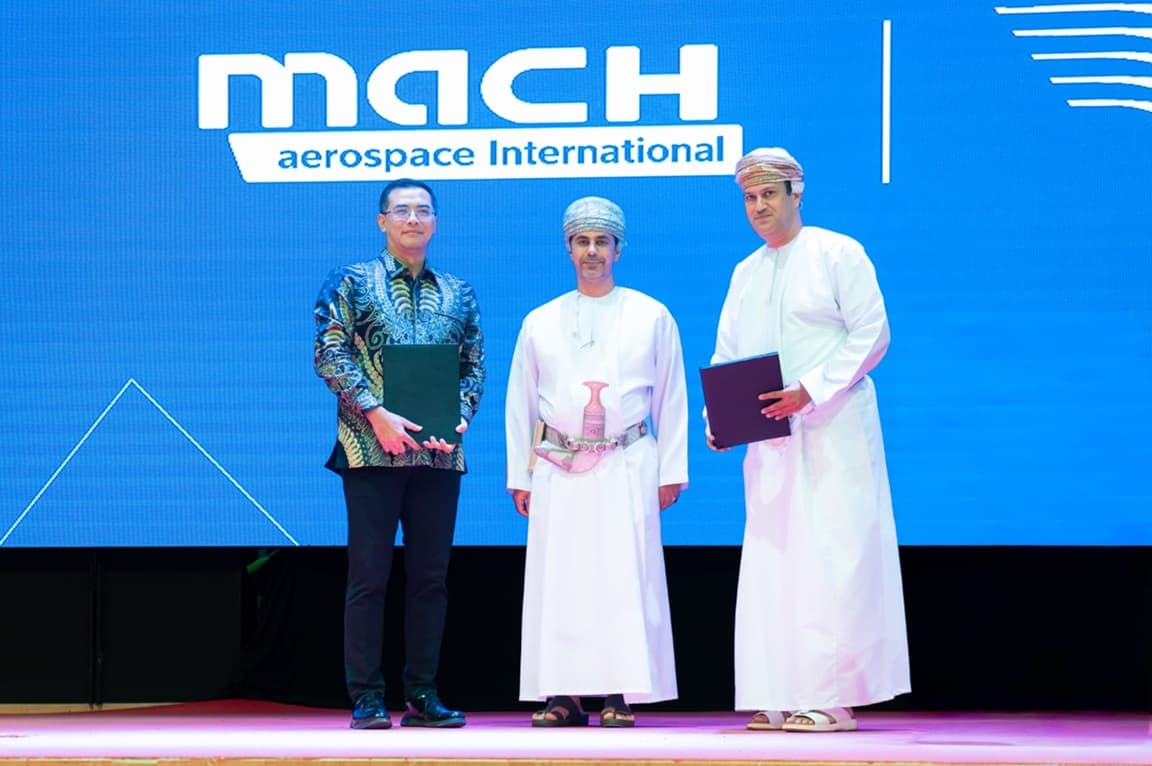
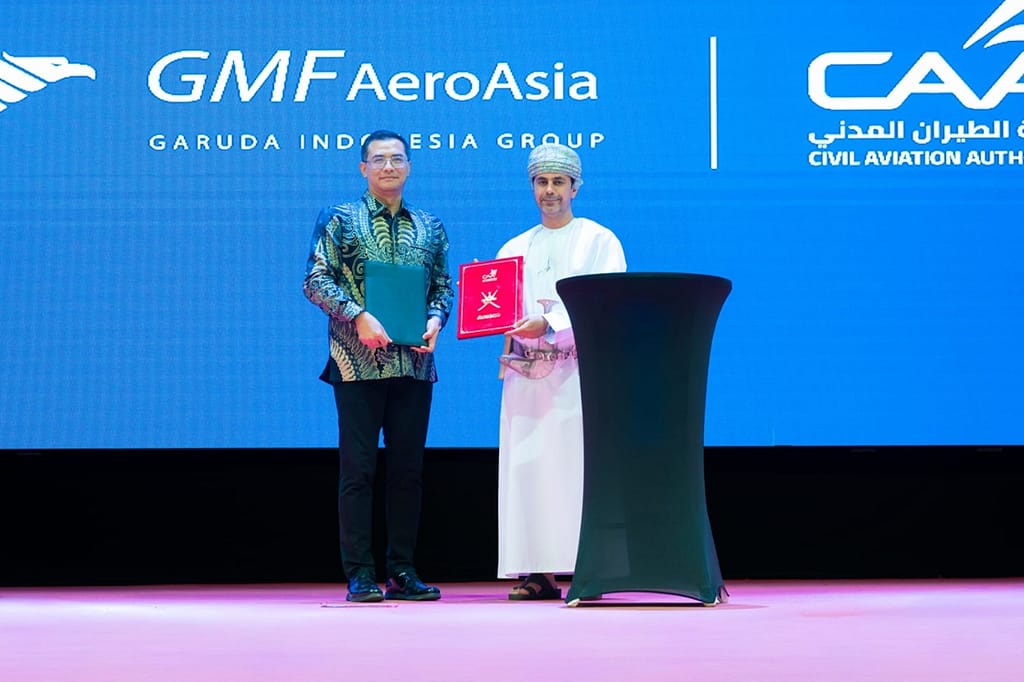
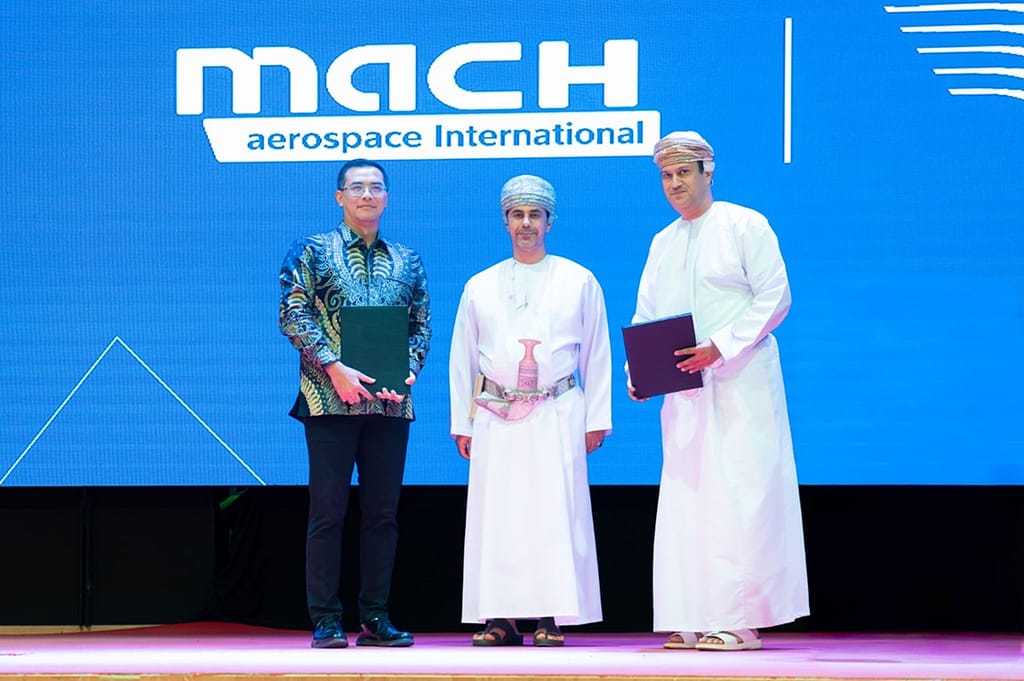
An agreement and memorandum of understanding (MoU) were signed by GMF AeroAsia with the Civil Aviation Authority (CAA), along with an agreement between GMF AeroAsia and Mach Aerospace International, during an investment forum organised by the CAA.
The agreements represent a strategic step towards strengthening the aviation sector in the Sultanate of Oman.
They aim to localise international technologies and expertise and develop national capabilities in aircraft engineering, maintenance and component manufacturing, in line with Oman Vision 2040 and the National Aviation Strategy 2040.
Dr Abdullah bin Masoud Al Harthi, Chairman of Mach Aerospace International, said the partnership marks a shift in Oman’s aviation sector from transport and operational services towards an integrated ecosystem encompassing maintenance, repair and overhaul (MRO), engineering training, and the manufacture of aircraft components and structures.
In a statement to the Oman News Agency, he explained that the partnership aims to establish a sustainable industrial and technical base combining GMF AeroAsia’s expertise with Mach Aerospace International’s local investment and development capabilities. This will support the aviation sector’s value chain, localise maintenance capabilities, attract private sector investment and develop national talent.
He added that preparatory, technical and regulatory work has begun on the aircraft wheels and brakes centre, paving the way for the next phase once the necessary approvals and requirements have been completed. Meanwhile, work is progressing on establishing an Aviation Engineering Academy, including the development of programmes, curricula, facilities and accreditation requirements, with implementation expected to begin in phases during 2027.

Dr Al Harthi noted that the aircraft structural components manufacturing project is the largest and most technologically advanced within the planned ecosystem. Implementation is expected to take between 12 and 18 months from the completion of the final requirements.
He explained that preliminary studies indicate that total investment in the projects could reach approximately OMR 25.4 million (USD 66 million). This includes around OMR 12.6 million (USD 33 million) in targeted capital investment for the aircraft structural components manufacturing project. Total investment could increase across subsequent phases as industrial and training capabilities and supporting services expand.
He said Oman was selected because of its strategic location between Asia, the Middle East and Africa, its advanced infrastructure, airports, ports and integrated logistics network, as well as its stability, investment environment and government vision for developing the aviation sector.
He added that the National Aviation Strategy 2040 identifies private investment, the development of aviation services, the localisation of maintenance activities and human capital development as key priorities, providing a favourable environment for these projects to grow and expand.
He explained that the aircraft wheels and brakes maintenance centre represents a vital component of the aviation ecosystem, as these parts require regular maintenance. Localising these services will retain a significant proportion of technical maintenance expenditure within Oman rather than sending components abroad.
He added that the centre will help develop specialised local expertise, reduce maintenance turnaround times, support domestic and regional airlines, and establish a supply chain for spare parts, equipment, logistics and technical services.
He confirmed that the project will target both domestic and international markets, with priority initially given to airlines operating in Oman before expanding into GCC markets, the wider Middle East, Africa and neighbouring markets.
The facility will be developed in accordance with the technical and regulatory standards necessary to obtain the required certifications, including those of Oman’s Civil Aviation Authority. As operations expand, the centre will seek appropriate international approvals, including European Part 145 certification, subject to the scope of services and final regulatory approvals.
He explained that the Aviation Engineering Academy will focus on developing human capital alongside investment in equipment and facilities. It aims to train Omani engineers and technicians to international standards while aligning training programmes with labour market requirements and aviation maintenance and manufacturing projects.
He noted that the academy’s training capacity will be determined by the facility’s design and accreditation requirements. Capacity will increase gradually as programmes expand, enabling the academy to produce qualified, employable professionals for the aviation sector.
He explained that the first phase will focus on aircraft engineering and maintenance, particularly the B1 and B2 aircraft maintenance licensing pathways, alongside specialised technical programmes covering the maintenance of aircraft structures, systems and components.
He added that Mach Aerospace International is working with GMF AeroAsia to transfer knowledge and training expertise and develop programmes in accordance with the requirements of Oman’s Civil Aviation Authority. The company also aims to obtain appropriate international accreditations, including Part 147 approval, subject to official authorisation.
The Chairman of Mach Aerospace International said the aircraft structural components manufacturing project aims, in its first phase, to establish industrial capabilities covering CNC machining, sheet metal fabrication, selected aircraft structural parts, components and subassemblies, as well as surface treatment, non-destructive testing, metrology and engineering tooling.
He explained that the product range will gradually expand in line with certifications, supply agreements and the requirements of international aircraft manufacturers and customers.
He confirmed that the company aims to move from importing services and components to exporting knowledge, services and manufactured products from Oman. Obtaining the necessary certifications, including AS9100, NADCAP and ISO 9001, depending on the scope of operations, will enable the factory to gradually join international supply chains and serve markets in the Gulf, Middle East, Africa and Asia, before expanding into other global markets.
He noted that the project aligns with Oman Vision 2040 and the National Aviation Strategy 2040, particularly their objectives of economic diversification, attracting private sector investment, developing human capital, localising advanced industries and services, and strengthening the contribution of aviation and logistics to the national economy.
He explained that local added value will be generated through direct investment in facilities, equipment and technology, the creation of specialised engineering, technical and administrative jobs for Omanis, reduced dependence on overseas services, and the retention of a greater proportion of expenditure within the national economy.
He added that the projects will generate growing demand for local suppliers in logistics, equipment and tools, information technology, facilities, transport, training and engineering services, while creating opportunities to export aviation services and products manufactured in Oman.
He confirmed that small and medium enterprises (SMEs) will be key partners in the ecosystem, with opportunities in logistics, transport and warehousing, the supply of tools, equipment and materials, information technology, engineering services, calibration, facilities management, safety, training, and administrative and support services.
He noted that the growth of these projects will help develop a local supply chain, enabling Omani enterprises to gradually move from providing general services to more specialised technical and industrial services.
Dr Abdullah bin Masoud Al Harthi affirmed that the partnership is not limited to a single maintenance project, training academy or manufacturing facility. Rather, it represents the beginning of an integrated aviation ecosystem in Oman, bringing together maintenance, training, manufacturing, technology transfer and the development of national expertise.
He said the ambition of the partnership between Mach Aerospace International and GMF AeroAsia, in cooperation with government and regulatory authorities and partners in Oman, is to transform the country into a competitive hub for aviation services and industries in the coming years, serving domestic, regional and international markets.
GMF AeroAsia, an Indonesian company, is a prominent global provider specialising in aircraft maintenance, repair and overhaul (MRO). It is a subsidiary of the Garuda Indonesia airline group. Its origins date back to 1949, and it was established as an independent company in 2002. The company has extensive experience in aircraft maintenance and employs thousands of engineers, technicians and specialists across various fields of aviation engineering and maintenance.
This is an unofficial English version of an Arabic report. To view the official Arabic text, click here.
Related stories: