31 December 2025
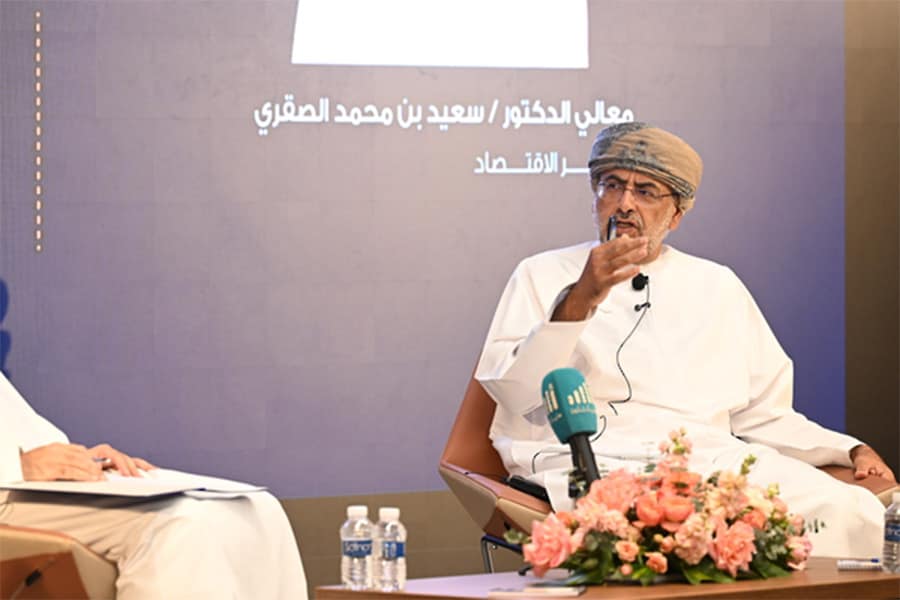
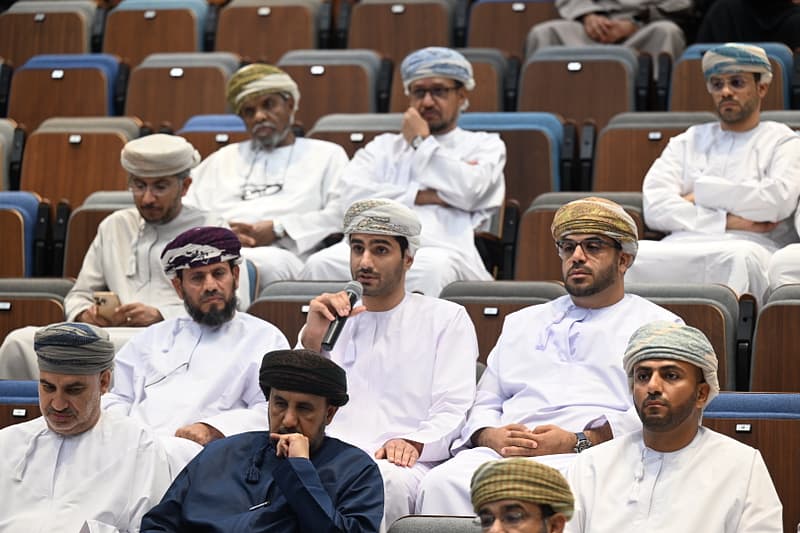
The Omani Economic Assembly organised the 29th Economic Council on “The Performance of the Omani Economy 2020-2025” by hosting Dr Saeed bin Mohammed Al-Saqri, Minister of Economy of the Sultanate of Oman.
In a presentation, The Minister touched on the prospects and trends of the global economy, the performance of the Omani economy, the eleventh five-year development plan for 2026 to 2030 as well as the prospects and trends of the global economy in 2026 and the global real GDP growth rate.
The Minister also touched on protectionist trade restrictions, the acceleration of climate change, and the continued concern of controlling global inflation and global debt rates during the period 2019-2025.
The Minister stressed that the public debt in Oman amounted to OMR 14.1 billion during the first half of this year, stressing that the average annual growth target for the period 2021-2024 is estimated at 5 percent, with non-oil activities representing 73 percent of the Omani economy at constant prices during 2024.
The Minister stated that non-oil activities recorded growth rates of 4.1 percent in the first half of 2025, while oil activities recorded a growth of 0.5 percent. According to IMF forecasts, the Omani economy is expected to grow by 4 percent during 2026 compared to 2.9 percent in 2025, while the Ministry of Economy expects the Omani economy to grow by 2.6 percent in 2026 compared to 2.2 percent during 2025.
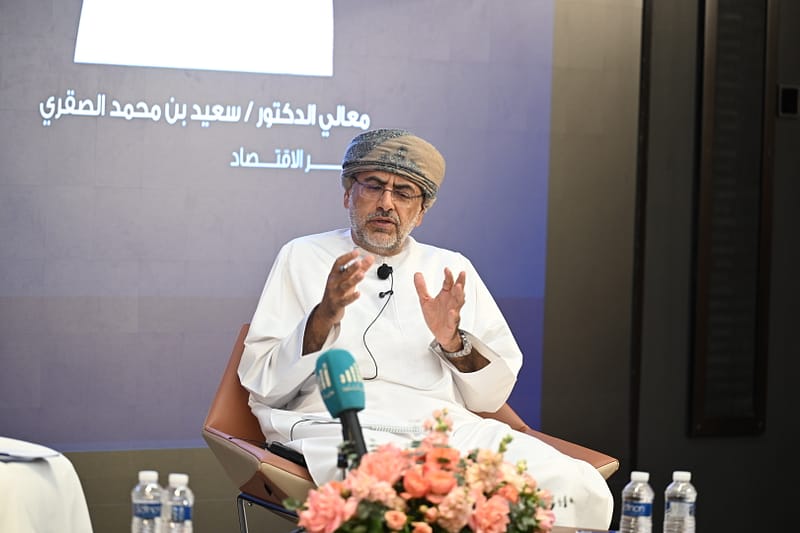
The Minister explained that legislation with an economic dimension was updated during the current year 2025, including the issuance of the Central Bank of Oman system, the issuance of the banking law, the establishment of the Investment and Trade Court, the issuance of the Public Health Law.
Other updates included the issuance of the Electronic Transactions Law, the Financial Law, the Special Economic Zones and Free Zones Law, as well as the issuance of the Social Protection Fund System, and the Executive Regulation of the Social Protection Law, the issuance of real estate regulation laws, the tax on individual income, and the collection of state dues. He pointed out that OMR 577 million were allocated for social benefits in the 2025 budget.
The Minister explained that the eleventh five-year development plan aims to achieve actual development results and ensure broad community participation in its preparation in order to harmonise the work of state institutions, and link integrated programmatic planning between the objectives of the long-term vision “Oman 2040” and the medium-term plan covering 2026 – 2030.
This will be achieved through programmes that contribute to achieving these goals and setting targets for them. In addition, economic modelling and results-based planning are in line with the direction of Oman to adopt the budgeting of programmes and performance, as it is possible to follow up the extent of achievement in the eleventh plan and evaluate its results and impact through a set of smart performance measurement indicators.
The Minister stressed that the plan accommodates changing global and regional dynamics, and will use scenario planning to predict different future scenarios, developing strategies to respond effectively, including identifying the main drivers of change, exploring various potential future signals of change, and preparing plans for potential risks.
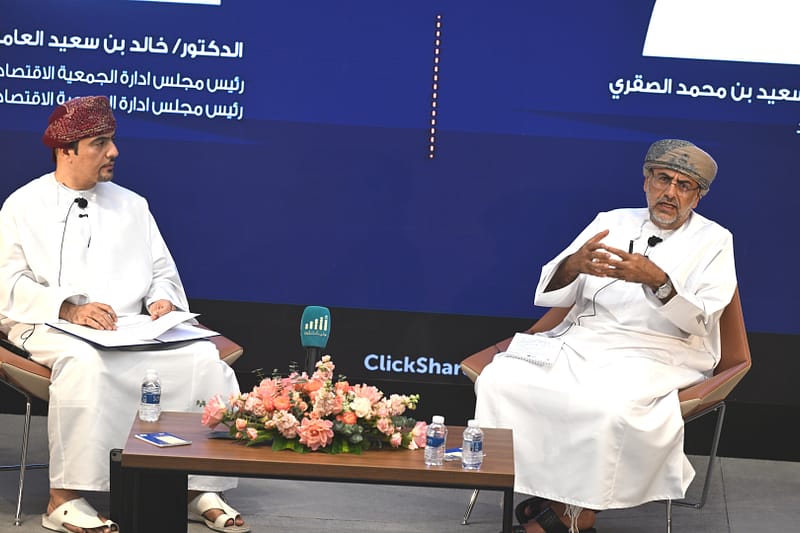
Dr Khalid bin Saeed Al Amri, Executive Chairman of the Oman Economic Association, said: “The march of the Omani economy during half a decade was not just figures in the growth records, but it was an epic of flexible planning and resolute implementation under the wise vision of His Majesty Sultan Haitham bin Tarik. He began 2020 with exceptional challenges, but the Omani economy has proven super flexible thanks to prudential financial measures.
“During the period 2020-2025, Oman was able to reduce public debt from levels exceeding 60 percent of GDP to safe levels that enhance the creditworthiness Oman, and achieve financial surpluses thanks to high oil prices and economic reforms. These directed the surplus towards debt repayment and support for development projects, in addition to raising the credit rating. These efforts culminated in raising Oman’s rating by international agencies to investment grade, reflecting global confidence in the policies of Oman in the era of the renewed Renaissance.”
He explained that the tenth five-year plan (2021 2025) represents the pillar of transformation. It is the rescue and construction plan, as it focused on financial sustainability through the National Programme for Financial Sustainability and Financial Sector Development, as well as economic diversification. It did this by focussing on promising sectors such as manufacturing, logistics, and tourism, with the entry of “green hydrogen” as a new strategic player. Social protection ran in parallel with economic reform, with a social protection system launched to ensure a decent life for all citizens.
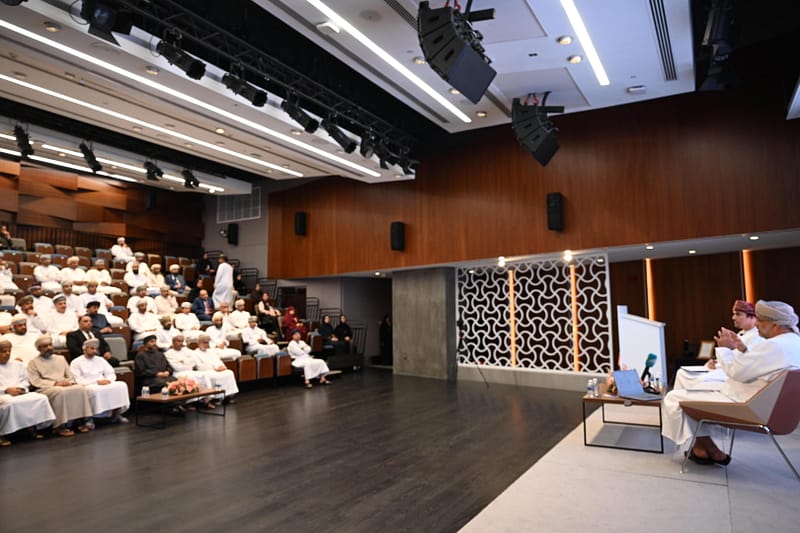
Dr Al Amri continued: “The Oman Economic Association looks forward to investing in innovation-based growth by promoting the digital economy and artificial intelligence as a locomotive of growth, and enabling the private sector to move from the role of “supporter” to the role of “main driver” for investment and employment. Such growth will also stress environmental sustainability by moving forward with the zero-carbon neutrality plan 2050, and attracting investments in clean energy.”
He explained that the positive indicators achieved by Oman are not an end in themselves, but rather a means to achieve the ultimate goal of what he called “the welfare of the Omani citizen and building a global competitive economy,” stressing that the Omani Economic Society will remain a partner in analysis, monitoring, and providing visuals that serve the public good.
This is an unofficial English version of an Arabic report. To view the official Arabic text, click here.
Related stories: