9 March 2026
The Ministry of Energy and Minerals continues to implement its plans to expand renewable energy projects as part of efforts to strengthen energy security, support sustainability and maximise the use of natural resources, particularly solar and wind energy. The plans aim to raise the contribution of renewable energy sources in the electricity generation mix to 30 per cent by 2030.
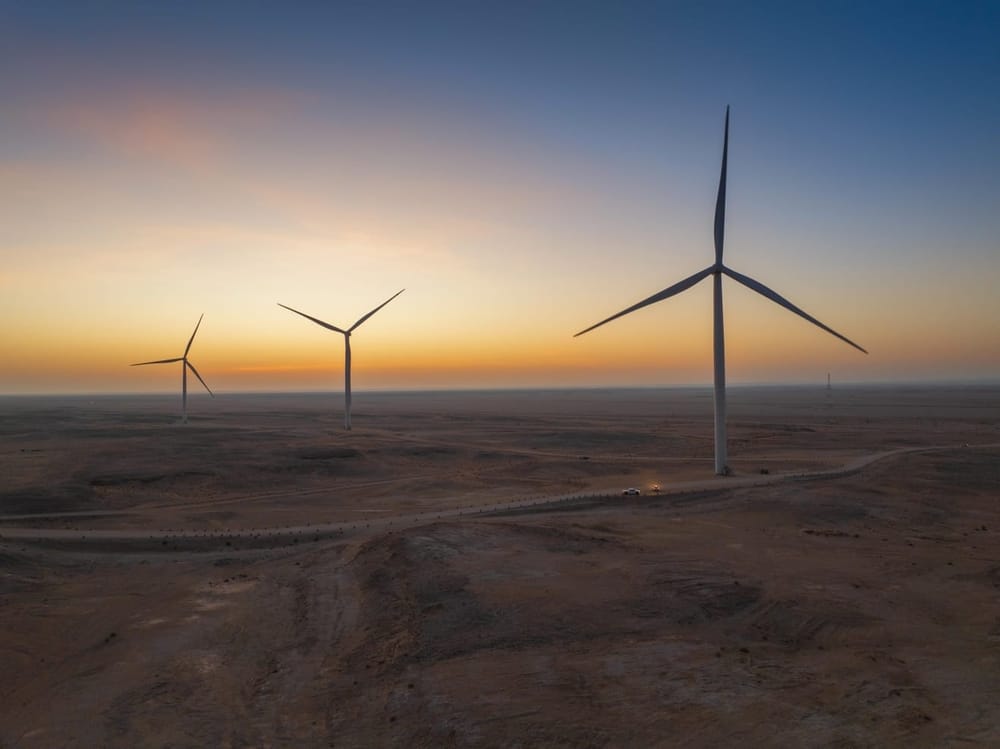
The renewable energy sector in the Sultanate of Oman is witnessing rapid growth with the operation of several key projects, including the Ibri and Manah solar power projects, in addition to the Dhofar wind power plant. These projects have contributed to enhancing the reliability of the electricity grid, with a combined production capacity of around 1,550 megawatts, representing 9.26 per cent of total electricity production in Oman.
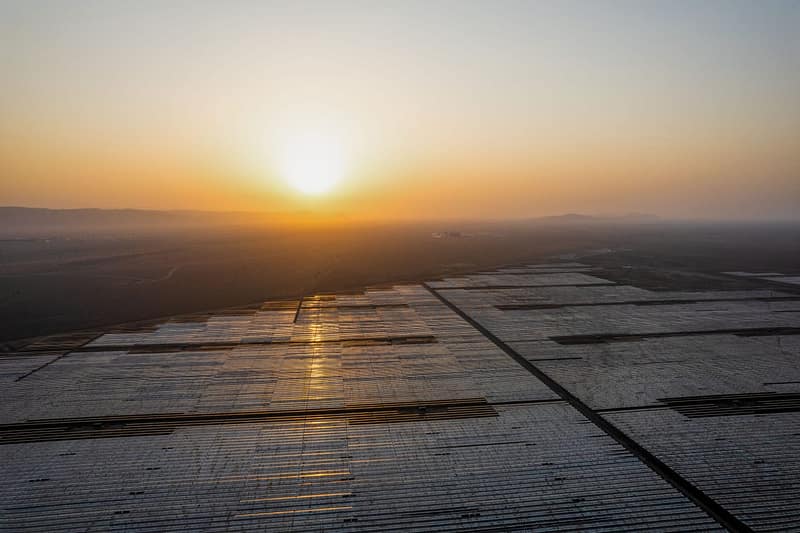
Regarding projects under development, work is also underway on the Ibri solar power project. It is expected to enter operation in the second quarter of 2027. The project includes battery electricity storage with a capacity of 100 megawatt hours. This step will enhance grid flexibility and support the integration of increasing renewable energy capacity. Work is also progressing on the Dhofar and Jalan Bani Bu Ali wind power projects, which are expected to begin operation in the third quarter of 2027.
Projects planned for implementation by 2030 include several solar energy projects in the Wilayats of Al Kamil and Al Wafi and Sinaw, as well as the Marsa project. They also include wind energy projects in Duqm, Mahout, Sadah, Shalim and the Hallaniyat Islands and Al Jazer. The total expected production capacity is around 5,080 megawatts of solar energy and 1,720 megawatts of wind energy. The plans also include a waste to energy project in Barka, which is expected to begin operation in the second quarter of 2031.
These projects cover strategic locations across several governorates in Oman, including Dhofar, Al Wusta, North Al Batinah, South Al Batinah, North Al Sharqiyah, Al Dhahirah and Al Dakhiliyah. They fall within designated land areas for renewable energy projects estimated at around 65,000 square kilometres.
Through these projects, Oman aims to increase the share of renewable energy in the national electricity mix to 30–40 per cent by 2030, 60–70 per cent by 2040 and between 90 and 100 per cent by 2050, reflecting its commitment to strengthening environmental and economic sustainability.

Engineer Hammoud Al Sawafi, Director General of Renewable Energy and Hydrogen at the Ministry of Energy and Minerals, said that renewable energy projects represent a key pillar in strengthening national energy security and supporting the transition towards a sustainable economy, in line with the objectives of Oman Vision 2040. He noted that the ministry focuses on maximising the economic and environmental impact of these projects by utilising local resources, creating quality employment opportunities and promoting the concept of sustainability within the electricity system.
In a statement to the Oman News Agency, he explained that the contribution of grid connected renewable energy sources increased from 4.26 per cent in 2024 to 9.46 per cent in 2025, marking an increase of around 5.2 per cent within a single year. Total electricity generated from renewable energy sources during 2025 exceeded 4 million megawatt hours.
Engineer Al Sawafi said that renewable energy projects have achieved a qualitative shift in the national electricity system. They have strengthened grid reliability, supported the diversification of energy sources, enhanced national capabilities and promoted the localisation of industries related to solar and wind energy. This approach reinforces the Sultanate of Oman’s path towards sustainability, innovation and achieving net zero emissions by 2050.
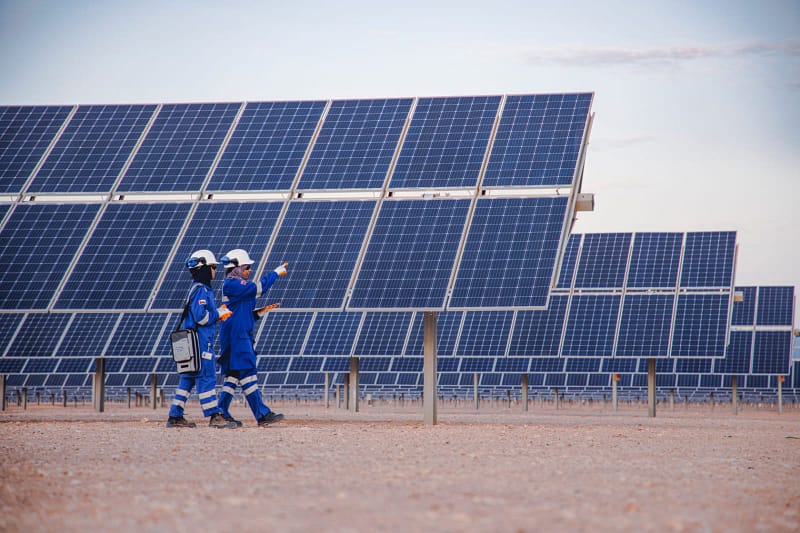
The environmental indicators of these projects reflect the practical dimension of Oman’s path towards achieving net zero emissions. Renewable energy projects currently help avoid around 1.62 million tonnes of carbon dioxide equivalent emissions from the electricity sector. The volume of avoided emissions is expected to rise to nearly 9 million tonnes of carbon dioxide equivalent by 2030, including about 2 million tonnes from wind projects and 7 million tonnes from solar energy projects.
These projects also help avoid the burning of approximately 1.5 billion cubic metres of natural gas, contributing to lower emissions intensity in the electricity sector. This comes within the national framework overseen by the Oman Net Zero centre to accelerate the transition to a low carbon energy system and reinforce Oman’s gradual and sustainable path towards net zero.
In terms of local added value, renewable energy projects implemented by Nama Power and Water Procurement Company achieved rates ranging between 15 per cent and 22 per cent in completed phases, with targets exceeding 25 per cent in upcoming projects, equivalent to about 25 million Omani rials. Around 5.7 million Omani rials were also directed to the local market to support work awarded to small and medium enterprises in completed projects. Projects currently in operation have contributed to reducing no less than 1.8 million tonnes of carbon emissions annually, while also lowering natural gas consumption per megawatt hour produced, enhancing the operational efficiency of the electricity sector.
At the same time, OQ Alternative Energy continues its role as the national leader in renewable energy projects, supporting a diversified and low carbon energy mix. During 2025, the company expanded its renewable energy portfolio by more than 2,000 megawatts through signing power purchase agreements for projects with a total capacity exceeding 740 megawatts, including major projects such as Ibri solar power, along with the Dhofar and Jalan Bani Bu Ali wind power projects.
OQ Alternative Energy’s projects recorded advanced local added value levels exceeding contractual requirements, reaching 23.85 per cent in the North Oman Solar project, 14.75 per cent in the Riyah 1 project and 18.50 per cent in the Riyah 2 project, reflecting the company’s commitment to localising value chains and strengthening the participation of national companies.
The company also launched the first national energy efficiency platform, which contributed to achieving annual savings of 22.5 gigawatt hours and reducing carbon emissions by around 9.4 thousand tonnes of carbon dioxide, while also supporting the implementation of energy management systems.
OQ has also achieved significant progress in the Riyah wind projects, with a combined capacity of 234 megawatts, through 36 turbines, making them the largest wind farm currently under development in Oman. The projects have recorded more than one million safe working hours, with work continuing according to the timetable for commercial operation in 2026.
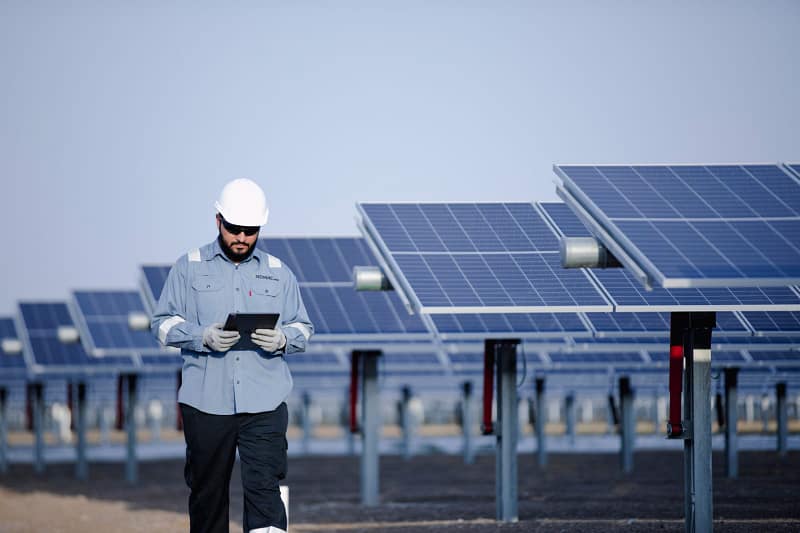
In parallel, the North Oman Solar project, with a capacity of 128 megawatts, has achieved notable progress in construction works. Through these developments, OQ Alternative Energy confirms its national role in the transformation of the energy sector by building an integrated system that supports the national economy and lays the foundation for sustainable energy industries.
This expansion of renewable energy projects comes within a comprehensive national strategy aimed at strengthening energy security, supporting value added and future industries, including green hydrogen production, promoting innovation in clean energy technologies and maximising the economic impact of national projects. The strategy also seeks to achieve net zero emissions and enhance the competitiveness of Oman in clean energy sectors at both regional and global levels.
This is an unofficial English version of an Arabic report. To view the official Arabic text, click here.
Related stories: