



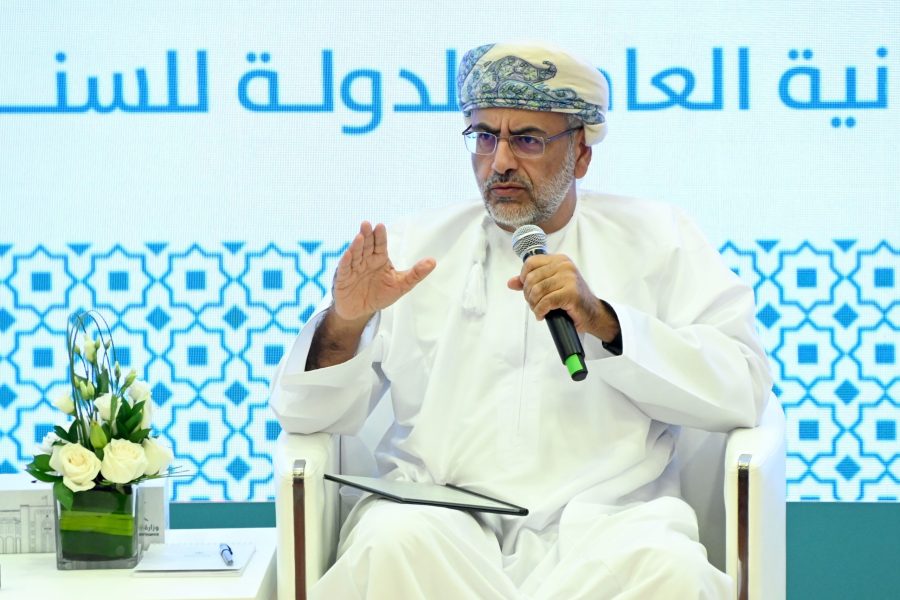
Oman launches five-year Development Plan
The Sultanate of Oman launched its Eleventh Five-Year Development Plan (2026-2030), the second executive roadmap for Oman Vision 2040, targeting an economic growth rate of approximately 4 percent at constant prices.
The plan represents a key phase for advancing economic and social transformation, underpinned by policies founded on efficiency, sustainability, and competitiveness. It emphasises fiscal sustainability and economic diversification, priorities that are now more critical than ever to safeguarding and perpetuating economic growth.
The plan also prioritises a gradual transition to a low-carbon economy and the implementation of sustainable environmental policies, aligning with global efforts to mitigate climate change impacts and conserve natural resources for future generations.
Serving as a bridge from economic recovery to a phase of growth and expansion, the plan is supported by a clear vision and integrated legislative and regulatory frameworks, placing Oman on a promising trajectory toward a prosperous and sustainable economic future.
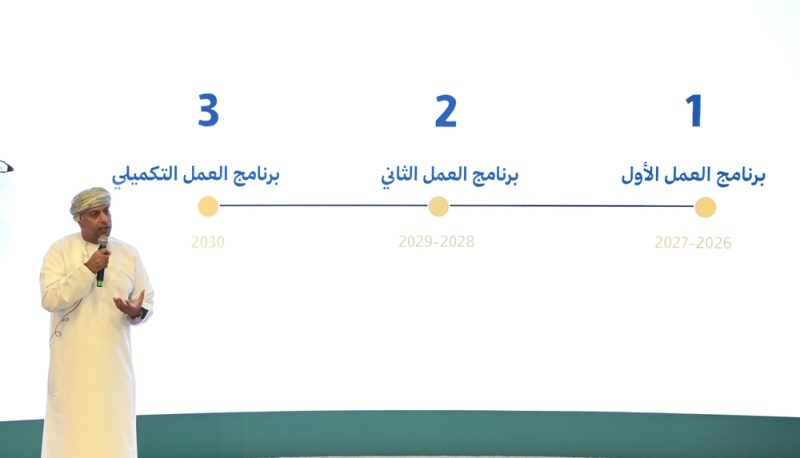
The timeline for the Eleventh Five-Year Development Plan is segmented into three distinct phases: the First Work Programme covering 2026-2027, the Second Work Programme covering 2028-2029, and a Complementary Work Programme in 2030 dedicated to evaluation and preparation for the Twelfth Five-Year Plan.
The framework is structured around two main pathways: The Economic Pathway, which leverages economic dimensions as catalysts to address challenges, to drive the economic process toward sustainable diversification, to enhance national export capacity, and to generate job opportunities. The Developmental Pathway concentrates on reinforcing infrastructure and meeting diverse developmental requirements to attain balanced social and environmental progress, while elevating household income in accordance with the goals of Oman Vision 2040.
The plan adopts programmes and initiatives derived from the work of cross-sectoral teams comprising various government and private bodies, as well as civil society institutions. It also incorporates strategic programmes deemed essential by the Government for implementation in the forthcoming phase, responding to both local and international developments.
Strategic objectives of the plan include the establishment of a diversified and sustainable economy, a phased transition to a low-carbon model, the enhancement of environmental sustainability, the promotion of economic decentralisation across governorates, the advancement of sustainable social development, the strengthening of governance and institutional performance, and raising labour market and employment efficiency.
Dr Said Mohammed Al Saqri, Minister of Economy, said that the Plan focusses on promoting promising economic sectors with high growth potential, high job-creating capacity, and significant contributions to Gross Domestic Product. Three core sectors are identified, namely: manufacturing industries, tourism, and the digital economy. Enabling and supporting sectors include: mining, food security, renewable energy, transport and logistics, as well as education and health.
The Minister said that the previous Tenth Five-Year Plan for 2021-2025 yielded 175,000 job opportunities. The new plan is expected to generate 300,000 positions in the public and private sectors during 2026-2030. This translates to an annual rate of 60,000 opportunities, made up of 10,000 within the government sector and 50,000 in the private sector.
Dr Nasser Rashid Al Maawali, Undersecretary at the Ministry of Economy, said economic projections for Oman in 2026 are positive, anticipating 4 percent growth, with inflation maintained at a stable 1.4 percent.
He added that preparatory work for the Eleventh Five-Year Development Plan, which began in July 2023, incorporated broad-based community participation to ensure coherence across state institutions and alignment with the ambitions of Oman Vision 2040.
Dr Nasser explained that the Eleventh Five-Year Plan envisages additional investments estimated at OMR 15.6 billion, channeled towards pivotal economic and social sectors to accelerate economic growth and realiee a target rate of 5 percent.
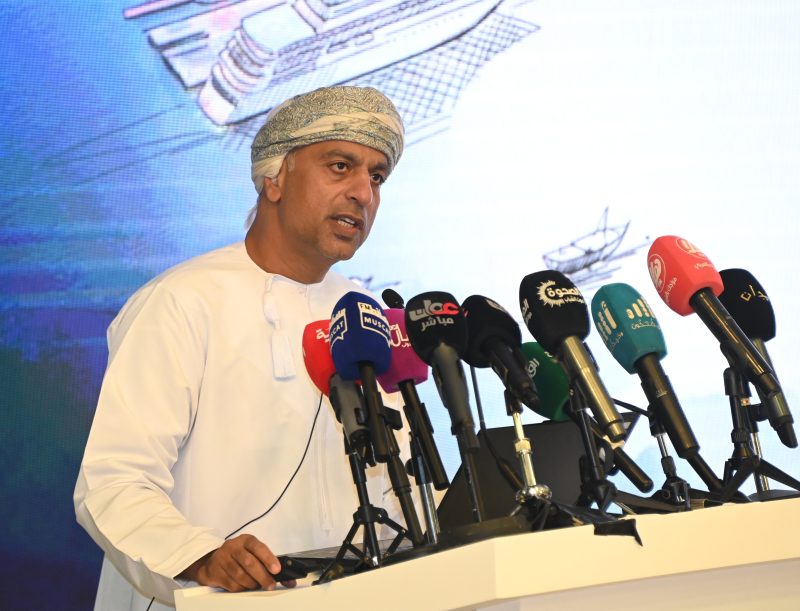
He said the Plan's targets include a Gross Domestic Product (GDP) growth rate of 4.6 % at current prices and 4 % at constant prices; an investment to GDP ratio of 28 % at current prices; a ratio of Foreign Direct Investment (FDI) inflows to GDP of 11 %; and an inflation ceiling of 2 %.
He further added that the Plan aims for the private sector's contribution to GDP at current prices to reach 56 %, with a private investment-to-GDP ratio of 21 %. The Plan targets growth rates of 4 % for non-oil activities and 2.6 % for oil activities, both at constant prices.
Dr Nasser explained that the Plan concentrates on high-potential sectors poised to lead economic expansion: manufacturing industries with a targeted growth of 5.9 %, the digital economy at 10.8 %, and tourism at 5.7%.
He noted that the average targeted growth rates for the plan's supporting sectors are as follows: food security (encompassing agriculture and forestry at 4.2 % and fisheries at 5 %), mining at 6.2 %, transport and logistics services at 7 %, education at 3 %, and health at 3.5 %.
He said that the Plan institutes a rigorous performance management system for implementation and monitoring, utilising clear indicators to track progress. This will ensure efficient execution and a tangible developmental impact on citizens' livelihoods.
Dr Nasser said the Tenth Five-Year Plan for 2021–2025, achieved a 97 % implementation rate, with 398 out of 411 strategic programmes achieved. He noted the Plan's success in addressing numerous economic challenges in the Omani economy, with most sectors and indicators meeting their established targets.
The financial framework for the Eleventh Five-Year Plan is predicated on an oil price of 60 US Dollars per barrel. Projections estimate average general revenues at approximately OMR 11.556 billion over the plan period, against average public expenditure of about OMR 12.222 billion, resulting in an estimated average deficit of OMR 666 million.
This financial framework incorporates key indicators reflecting fiscal policy approaches, including raising the contribution of non-oil revenues to 37.4 % of total general revenues by 2030. Annual development expenditures are estimated at OMR 900 million, with an additional annual allocation of OMR 400 million dedicated to economic transformation projects. Average annual allocations for the social protection system are projected at OMR 668 million.
The Plan anticipates a significant expansion in labour market programmes and initiatives. This aligns with the Government's focus on augmenting the financial resources of the Ministry of Labour's Training and Employment Support Centre, enhancing regulatory and legislative frameworks for citizen employment in the private sector, and amplifying the role of governorates in fostering quality, sustainable employment opportunities.
Based on economic modelling, approximately 700,000 job opportunities are forecast to be created in total during the plan period, with about 300,000 direct opportunities for Omanis in the public and private sectors—averaging 60,000 annually. The plan also aims to generate further employment by continuously regulating the labour market and employment policies to favour the national workforce.
Projections indicate that new jobs for Omanis in the private sector will be predominantly concentrated in retail (34.2 % of total expected opportunities), followed by construction (29.8 %), and then industry, tourism, and transport at 10.6 %, 8.7%, and 5.5 %, respectively.
Strategic programmes have been defined for each national priority, alongside dedicated programmes for the information and communication technology sector and the youth and entrepreneurship sector. In total, the plan encompasses 190 strategic programmes distributed across the priorities of Oman Vision 2040.
Follow us